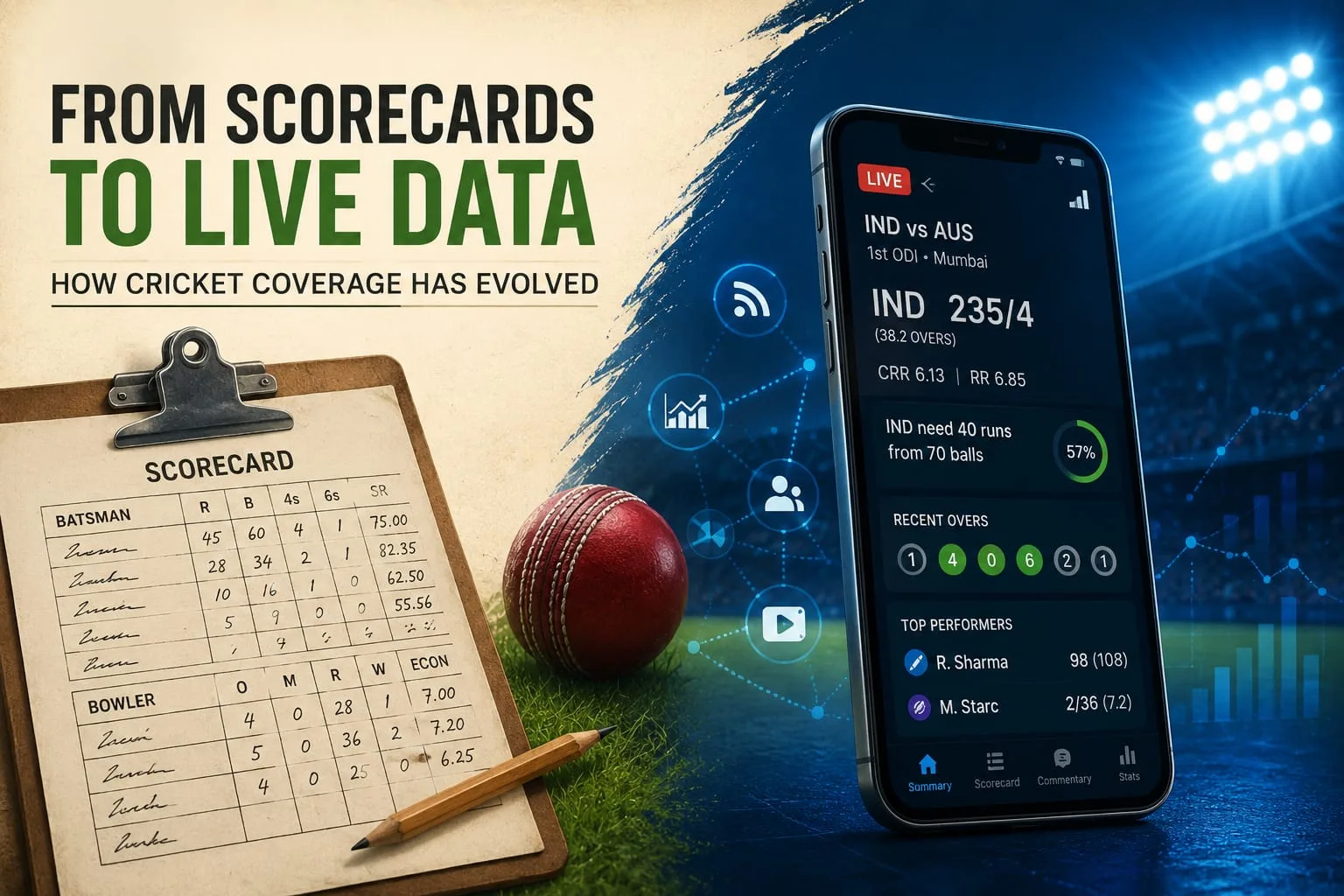
A cricket score can look simple, but it rarely tells the full match story by itself. The same total can feel strong in one innings and weak in another. A team can be ahead on runs and still under pressure because wickets have fallen. A chase can look difficult until the over count, batting depth, and recent scoring pattern are shown. That is why a live cricket page needs more than numbers. It has to explain what the score means while the match is still moving.
Why match context matters before interpretation
Match context matters because cricket is not read in one line. The score, wickets, overs, batting pair, bowler, match format, and recent phase all work together. Interest around desi cricket betting also shows why live cricket pages should present match information clearly before users interpret odds, momentum, or late-game changes.
A plain scoreboard can leave too much open. For example, 145 for 3 after 16 overs feels very different from 145 for 7 after the same point. The number is the same. The situation is not.
A useful live cricket page should show the match state close to the score. Users should see who is batting, what the required rate looks like, how many wickets remain, and whether the innings is in its early, middle, or late stage. That turns a number into a real match picture.
What context users need during live cricket
A good live cricket page should not make users piece the match together from separate sections. The current situation should be easy to read in one place, especially when the match is changing quickly.
Useful match context includes:
- Innings phase and match format.
- Current run rate and required rate.
- Wickets lost and wickets remaining.
- Recent overs and scoring pattern.
- Batter and bowler status.
- Field phase such as powerplay or death overs.
- Responsible-use tools near account sections.
These details change how the score should be understood. A required rate of 10 can look high, but it may be manageable with set batters and wickets in hand. A modest target can still become difficult if early wickets fall. A low-scoring match may also make sense if conditions are helping bowlers.
Live cricket pages are most useful when this context is placed near the live score, not hidden far below it.
How recent overs change the meaning of a score
Recent overs often explain the real direction of a match. A team may look comfortable on the scoreboard, then two tight overs change the pressure. A chase may look slow, then one big over brings it back within reach.
That is why a live page should show the last few overs clearly. Boundaries, dot balls, wickets, extras, reviews, and pauses all matter. They show whether the batting side is building, stuck, recovering, or taking risks.
This is better than vague claims about momentum. The page can simply show what happened. A wicket in the last over says enough. Three boundaries in two overs also say enough. Users can read the match through the evidence instead of guessing.
Cricket turns on small passages. Sometimes the last twelve balls explain more than the total score. A strong live page makes that passage easy to see.
Why player and phase details matter
Player context changes the score. A set batter at the crease can make a chase look steadier. Two new batters can make the same chase feel much less safe. A bowler with one over left can change how the final phase is read.
The phase of play matters too. Powerplay overs are about fast starts and field limits. Middle overs often test control. Death overs can swing the match quickly. An innings break gives users a chance to compare the target with conditions and team balance.
A live cricket page should show these signals without making users dig. Batter status, bowler spell, phase of innings, and current pressure should be easy to spot. These are the details that explain why a score is strong, weak, or uncertain.
Without player and phase context, users see the number but miss the reason behind it.
How responsible tools support live match reading
Live cricket can move fast, so pages connected to betting-related content should also make practical controls easy to find. Account settings, limits, support, privacy notes, and terms should not be hidden behind confusing menus.
These tools do not need to crowd the scoreboard. They just need a clear place near account sections. Users should be able to check rules, limits, or support without losing the match page.
Clear wording helps here. If a section shows odds, markets, account settings, or terms, it should say so plainly. A live match is already moving quickly. The page should not make users guess what a control means.
Responsible tools give the page better balance. They let users read the match with context instead of reacting only to every small change.
What better live cricket pages should explain first
Better live cricket pages should explain the match state before anything else. The first view should show the teams, score, innings phase, wickets, overs, recent pattern, and main player context. That is the information users need to understand the game as it stands.
A strong page does not treat runs as the whole story. It puts meaning beside the number. Recent overs show the direction. Wickets show risk. Player details show stability or pressure. Match phase shows how much time is left to change the result.
Live cricket is easier to follow when the page answers one basic question: what does this score really mean right now? Runs and wickets start the answer. Context completes it. That is what makes a live cricket page useful while the match is still changing.