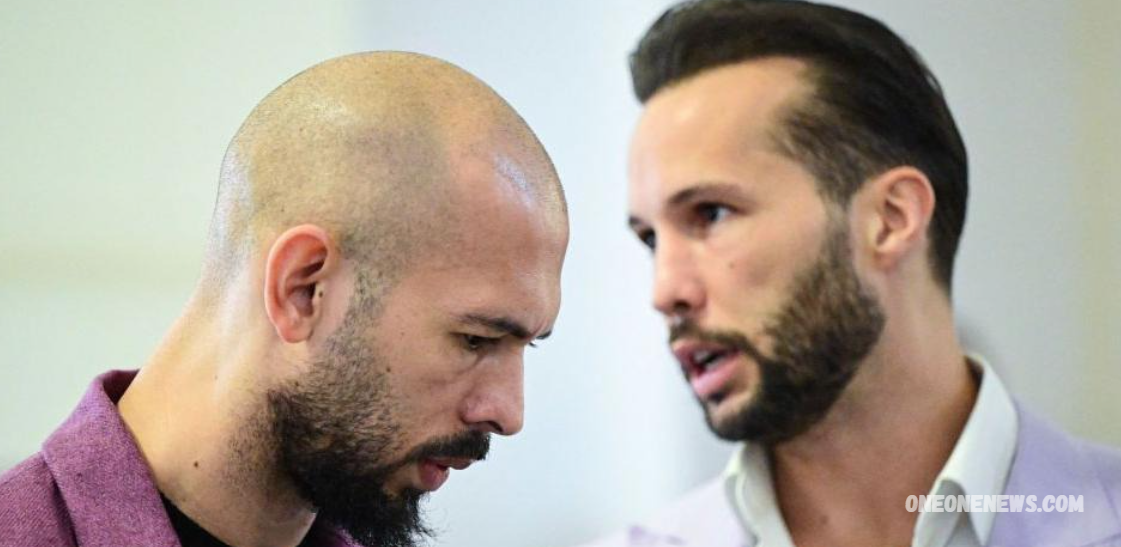

As the people of Bucharest navigate the late winter ice and slush that coat the city’s elegant streets, the Tate brothers’ sudden departure by private jet has left a trail of confusion and lingering questions.
Amidst a country grappling with the fallout of a canceled presidential election, uncertainty about its future in Europe, its stance on supporting neighboring Ukraine, widespread corruption, and a deepening erosion of trust in public institutions, the question now arises: Why have two controversial foreign nationals, facing a series of complex and serious criminal charges, been treated with such apparent leniency? Their confiscated assets have been returned, and their passports restored—moves that have only deepened the mystery surrounding their case.
The brothers, who had been facing a series of criminal charges in Romania, including human trafficking and organized crime, had been detained for several months. Their arrest, which came after an extensive investigation, was seen as a pivotal moment in the country’s ongoing battle against corruption and criminal activity. However, their sudden release has raised eyebrows, with critics questioning the fairness and transparency of the legal process.
A Tenuous Legal Situation
For many in Romania, the Tates’ release seems abrupt and, to some, suspicious. Detained initially under charges of trafficking and sexual exploitation, the brothers’ legal journey had been marked by delays and a constant back-and-forth between the courts. Despite the serious nature of the charges, the brothers were granted multiple appeals to extend their detention, with their case becoming a point of national focus.
What made the situation even more baffling was the brothers’ sudden reversal of fortune. The assets that had been seized during their investigation were returned, and their passports, once confiscated, were reinstated. This dramatic shift has left many asking: Why the leniency?
Some experts point to political connections, others to an undisclosed legal loophole that may have been exploited, but no concrete evidence has surfaced to explain the sudden change in the Tate brothers’ circumstances. Speculation is rampant, with theories ranging from corruption within Romania’s judicial system to international pressure exerted on the government.
Theories and Conspiracy
In the absence of concrete details, the release of the Tates has sparked a flurry of conspiracy theories, many of which are based on little more than conjecture. Some claim that influential figures within Romania’s political elite have orchestrated the release in exchange for financial or political favors. Others suggest the brothers may have struck a secret deal with authorities or international organizations, securing their freedom in return for cooperation on issues unrelated to the case.
Adding fuel to the fire, some argue that the Tates were never meant to face justice in the first place, and that their arrest was a politically motivated move designed to appease international critics. The fact that their release came so swiftly after their high-profile arrest has only deepened suspicions about the integrity of the legal process in Romania.
Yet, despite the swirl of rumors, no hard evidence has emerged to support any of these theories. The Romanian authorities have been notably tight-lipped about the case, offering little explanation for the sudden reversal. This lack of transparency has only fueled further speculation, leaving the public in a state of uncertainty.
The Political Context
Romania’s current political climate also plays a crucial role in understanding the broader implications of the Tates’ release. The country is facing a number of significant challenges, including a cancelled presidential election, widespread corruption scandals, and a general loss of faith in public institutions. In such an environment, many are questioning the motivations behind key political decisions and legal rulings, wondering whether external pressures—whether domestic or international—are influencing the course of justice.
The Tates, who have attracted a massive global following for their controversial views, are seen by some as symbols of defiance against mainstream norms. Their case has become a flashpoint in Romania’s ongoing struggle with corruption, political dysfunction, and the quest for justice. With the country’s future uncertain, many wonder whether the treatment of the Tate brothers reflects deeper issues within Romania’s legal and political systems.