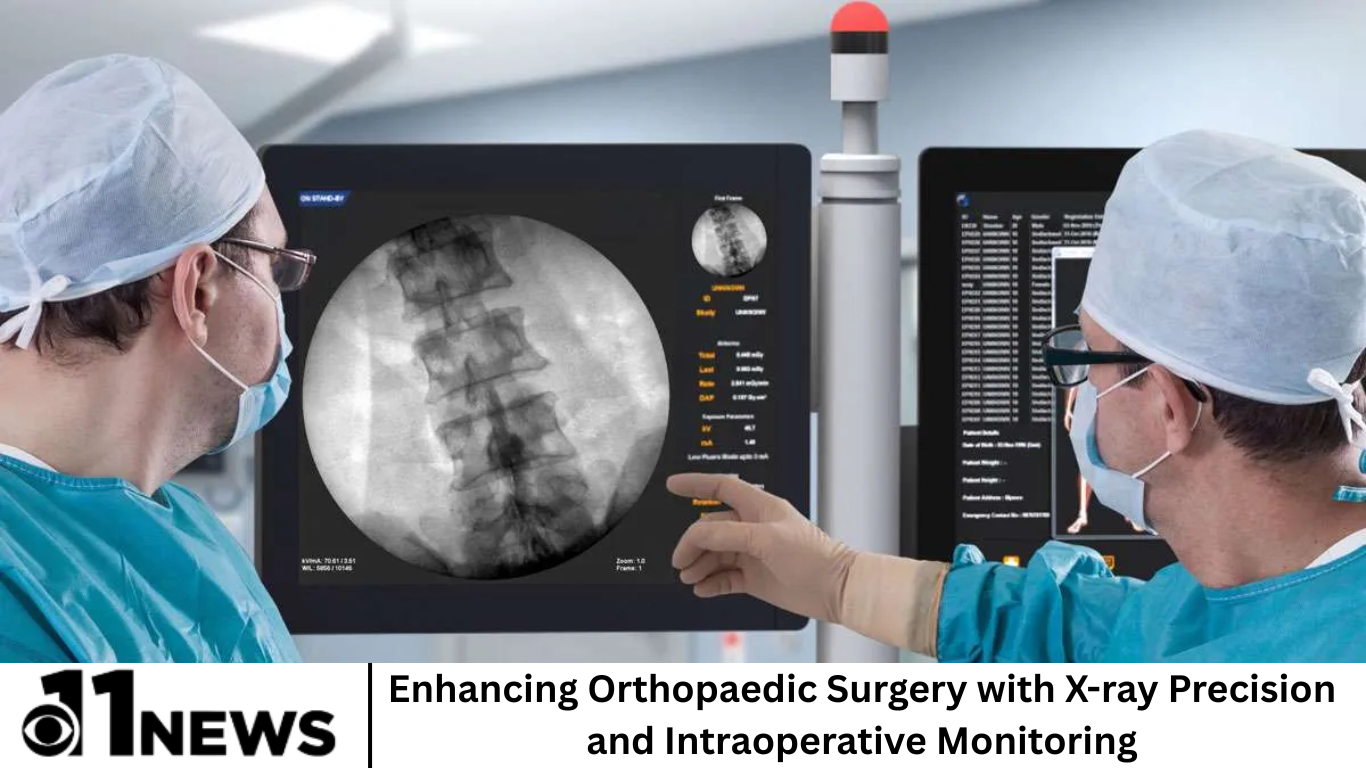

Orthopaedic surgery has evolved significantly in recent decades, with technological advancements reshaping how procedures are planned, performed, and monitored. Among the most transformative innovations are X-ray precision diagnostics and intraoperative monitoring.
These tools not only provide real-time insights into patient anatomy but also help surgeons achieve greater accuracy, reduce complications, and improve recovery outcomes. Orthopaedic surgery demands exceptional precision, especially when dealing with bones, joints, and complex musculoskeletal systems.
This article explores how X-ray technology and intraoperative monitoring systems are enhancing orthopaedic surgery, diving into their mechanisms, benefits, challenges, and future potential.
More Read: Reviving Mitochondria Could Combat Toxic Proteins in Alzheimer’s
The Role of Imaging in Orthopaedic Surgery
Imaging serves as the backbone of orthopaedic diagnosis and treatment. Before any surgical intervention, accurate imaging is essential to:
- Assess bone alignment and joint conditions
- Detect fractures, deformities, or soft tissue damage
- Plan the precise surgical approach
- Ensure correct implant placement and alignment
Traditional imaging tools like X-rays, CT scans, and MRIs play critical roles preoperatively. However, the demand for intraoperative imaging has surged, enabling surgeons to verify positioning and alignment during procedures.
Understanding X-ray Precision Diagnostics
How X-ray Imaging Works
X-rays use electromagnetic radiation to capture images of internal body structures, especially bones. In orthopaedics, X-rays offer:
- Fast imaging
- High-resolution bone detail
- Immediate availability in surgical settings
With digital radiography (DR) and computed radiography (CR), image quality and processing speed have improved dramatically. Surgeons can now make on-the-spot decisions during surgery using detailed digital X-ray visuals.
Precision Diagnostics in Practice
Precision X-ray diagnostics incorporate advanced imaging systems with high-resolution detectors, allowing for:
- Sub-millimeter accuracy
- Real-time image feedback
- Dynamic imaging under stress or motion
These features are invaluable during complex surgeries, such as spinal instrumentation, joint replacement, and fracture fixation.
Intraoperative Monitoring: A Game-Changer in the OR
What is Intraoperative Monitoring (IOM)?
Intraoperative monitoring refers to real-time surveillance of patient physiological functions during surgery. In orthopaedics, IOM often includes:
- Fluoroscopy (real-time X-ray imaging)
- Neurophysiological monitoring (e.g., SSEP, MEP)
- Navigation systems and robotics
- Radiopaque markers and tracking
These systems guide the surgeon’s hands with pinpoint accuracy while keeping critical structures safe.
Why It Matters
Mistakes in orthopaedic surgery—such as misaligned screws or poorly placed implants—can lead to devastating long-term effects. IOM reduces this risk by offering:
- Live feedback
- Navigation for instruments
- Reduced revision surgeries
- Improved post-op function and mobility
Benefits of X-ray Precision and Monitoring in Surgery
Enhanced Surgical Accuracy
Precision imaging helps place screws, rods, and implants with exactness. This is crucial in spinal, hip, and knee surgeries, where millimeters make a difference.
Real-Time Decision Making
Surgeons can evaluate positioning during surgery, not afterward. This allows corrections to be made immediately.
Reduced Risk of Complications
By using intraoperative monitoring, surgeons can avoid damaging nerves, blood vessels, or critical bone structures.
Improved Patient Outcomes
Accurate surgery leads to fewer complications, faster healing, less pain, and higher satisfaction scores.
Lower Reoperation Rates
Immediate verification during surgery decreases the likelihood of repeat procedures due to misalignment or failed hardware.
Case Studies and Real-World Applications
Spinal Fusion Surgery
In complex spinal fusions, intraoperative fluoroscopy and 3D X-rays (e.g., O-arm systems) help align rods and place pedicle screws with high precision, preventing nerve root injuries.
Hip Replacement
Accurate acetabular cup placement is vital. Using intraoperative imaging, surgeons can ensure the correct angle and depth, reducing the risk of dislocation or leg length discrepancy.
Pediatric Deformity Correction
For children with scoliosis or congenital deformities, imaging helps tailor corrections to growing bones without overcorrection.
Trauma and Fracture Fixation
Real-time imaging ensures that fractured bones are aligned correctly and fixed securely with plates or rods.
Technological Advancements Driving Better Outcomes
3D X-ray Imaging (O-arm & C-arm Systems)
These systems provide rotating 3D scans, creating a complete intraoperative image without moving the patient.
Navigation-Assisted Surgery
Computer-assisted tools integrate X-rays with navigation software to guide instruments in real time, similar to a GPS.
Robotics in Orthopaedics
Robotic systems work alongside imaging to execute precise cuts, drill holes, or place implants under guided supervision.
Artificial Intelligence (AI)
AI-enhanced imaging software can now detect subtle issues in real time, assisting surgeons with better diagnostics and predicting complications.
Challenges and Limitations
Despite the many benefits, there are challenges to consider:
Radiation Exposure
Prolonged use of intraoperative X-ray can increase exposure risk for both patients and surgical teams. Protective measures and limiting time are essential.
High Equipment Cost
Advanced systems like robotic-assisted X-ray navigation or 3D C-arms require significant investment, often limiting their use to major hospitals.
Learning Curve
Not all surgeons are trained to use intraoperative monitoring or navigation tools. Specialized training and experience are crucial for effective use.
Workflow Disruption
Intraoperative imaging can sometimes delay surgery or interrupt sterile fields if not properly integrated.
Future Directions in Orthopaedic Imaging and Monitoring
The future is bright for imaging and monitoring in orthopaedics. Upcoming innovations include:
- Low-dose radiation systems
- AI-guided robotic surgery
- Augmented reality (AR) for real-time surgical overlay
- Wearable post-op monitors integrated with surgical data
- Remote-assisted imaging for rural surgeries
As these technologies mature, orthopaedic surgery will become safer, faster, and more personalized.
Frequently Asked Question
What is the difference between regular X-rays and intraoperative imaging?
Regular X-rays are typically used for diagnosis before surgery, while intraoperative imaging provides real-time visuals during the procedure. The latter allows surgeons to make adjustments on the fly.
How does intraoperative monitoring improve patient safety?
It reduces risks such as nerve damage, malpositioned hardware, and improper alignment. This leads to fewer complications and faster recovery.
Are there any risks associated with intraoperative imaging?
Yes. The main risk is radiation exposure, though modern systems use lower doses and safety protocols like lead shielding minimize this risk.
Is X-ray precision imaging only used in complex surgeries?
While especially beneficial in complex cases, even routine procedures like hip or knee replacements can benefit from improved accuracy and verification.
How do surgeons get trained in using intraoperative monitoring tools?
Many hospitals offer specialized training programs, fellowships, or certifications. Manufacturers also provide equipment-specific training modules.
Does intraoperative imaging add time to the surgery?
It can slightly increase the duration, especially if extra imaging is needed. However, the benefits in accuracy and reduced reoperation far outweigh the minimal time addition.
What are some alternatives to X-ray for intraoperative monitoring?
Alternatives include ultrasound, MRI (though rare intraoperatively), neurophysiological monitoring, and computer navigation systems using pre-op CT/MRI data.
Conclusion
Orthopaedic surgery is becoming increasingly precise thanks to the integration of X-ray diagnostics and intraoperative monitoring. These technologies are not just optional enhancements—they are becoming essential components of modern surgical practice. From planning to execution, real-time imaging provides the clarity and confidence surgeons need to achieve optimal outcomes. As we look to the future, the synergy between imaging, AI, and robotics will only grow stronger. Hospitals, surgical centers, and practitioners must embrace these tools to stay ahead in delivering safe, efficient, and life-improving orthopaedic care.