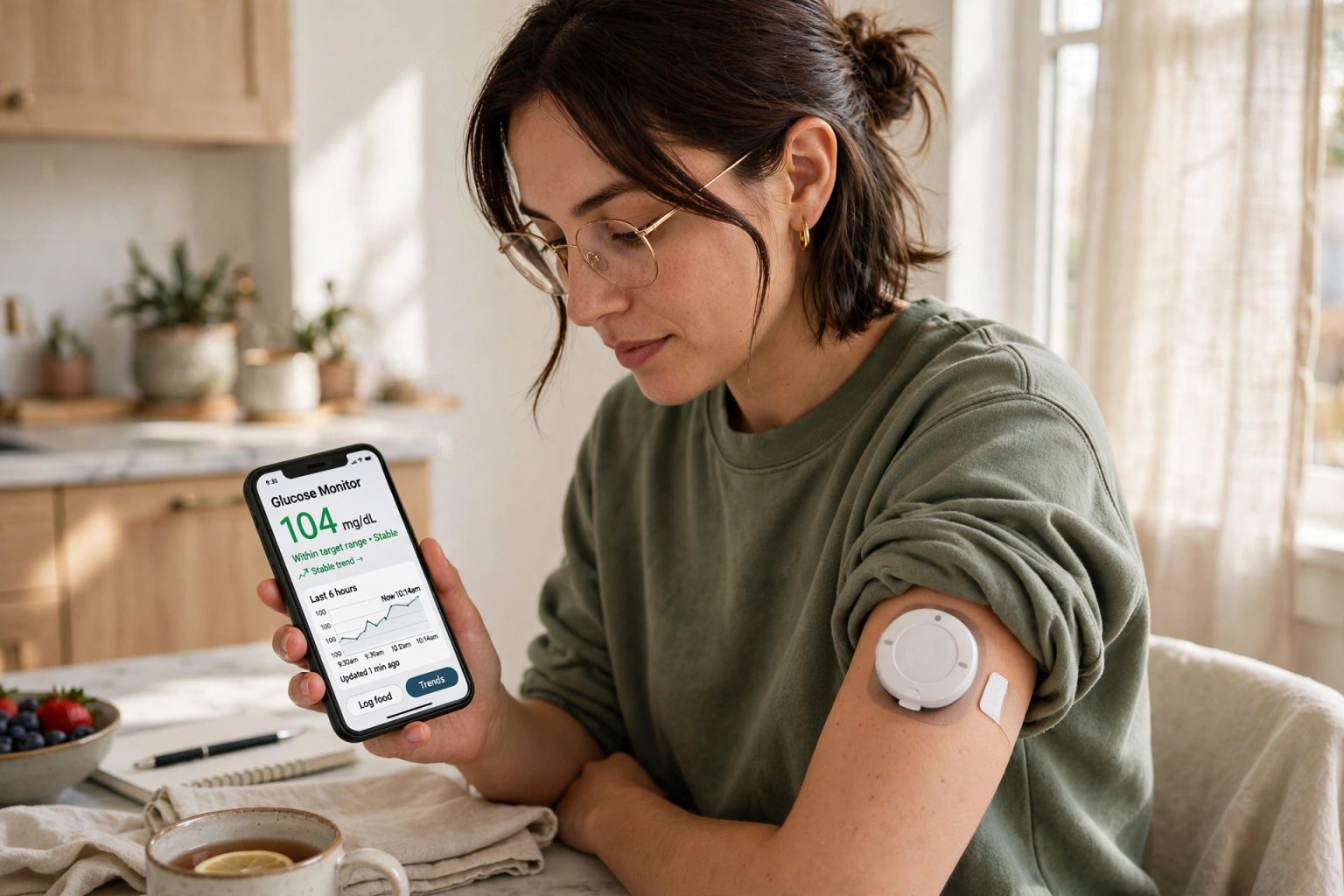

Continuous glucose monitors can help adults with type 2 diabetes who do not use insulin spend about five more hours a day in their target blood sugar range, according to the largest clinical trial of its kind, published in the New England Journal of Medicine.
The finding matters because this group is large and often overlooked in diabetes technology research. An estimated 20 million adults in the United States live with type 2 diabetes without taking insulin, and many still do not reach recommended blood sugar targets despite existing treatments. Over time, persistently high blood sugar raises the risk of heart disease, kidney disease and vision loss.
What the Trial Found
The study followed 283 adults for 26 weeks across 22 primary care practices in the United States. Participants who used a continuous glucose monitor, a small sensor worn on the body that tracks glucose day and night, spent roughly five additional hours each day within their target range compared with those receiving routine care.
The improvements went further. Nearly twice as many monitor users brought their A1c, a measure of average blood sugar over about three months, below 7 percent, a common treatment goal. The difference in A1c between the groups was 0.9 percentage points, well above the level doctors generally consider clinically meaningful.
Details of the research were reported by the University of Colorado Anschutz, where first author Tamara Oser, a professor in the Department of Family Medicine, led the work.
Why Seeing the Data Changes Behaviour
A finger-prick test gives a single reading at a single moment. A continuous monitor, by contrast, shows patterns. Users can see how a particular meal, a walk after dinner, stress or poor sleep affects their glucose, often within minutes. That feedback loop can make everyday choices clearer without requiring a complete change of lifestyle overnight.
Clinicians say this is one reason the technology may work well in primary care. Most people with type 2 diabetes are treated by their regular doctor rather than by a specialist, and this trial deliberately enrolled patients through primary care practices. That design makes the results more relevant to everyday practice than a study run only in specialist clinics.
Oser and her colleagues note that the trial is the first large, multicentre randomised study to test the devices specifically in adults with type 2 diabetes who do not take insulin, a population that has historically been under-researched.
What It Could Mean for Guidelines and Coverage
At present, national diabetes guidance gives its strongest level of evidence for monitor use in people who take insulin. Recommendations for people who do not use insulin rest on a weaker evidence base, largely because trials like this one had not been done at scale. The researchers hope the new results will help close that gap.
If guidelines are strengthened, insurance coverage could follow. Cost and coverage remain major barriers for many patients, even when a doctor believes a monitor would help. Wider coverage would not remove every obstacle, since sensors must be replaced regularly and users need support to interpret the data, but it would make the technology a realistic option for far more people.
For more health coverage and practical explainers, readers can follow the latest reporting on OneOne News.
Should You Ask About a Monitor?
The study authors suggest that people with type 2 diabetes who do not use insulin talk to their primary care provider about whether a monitor could fit into their care plan. It will not suit everyone, and it does not replace medication, diet, activity or regular check-ups. Skin irritation, alarm fatigue and the sheer volume of data can also be drawbacks for some users.
Still, five extra hours a day in a healthy range is a substantial shift, equivalent to more than 75 additional days a year spent closer to target. For a condition managed in small daily decisions, a tool that makes those decisions better informed could have benefits that build up quietly over years.
As the evidence grows, the conversation is likely to move from whether these devices help this group of patients to how health systems can provide them fairly, train primary care teams to use the data well, and ensure that the benefits seen in the trial reach the people who need them most.